Every new coffee needs more than a good story. It needs to work in the roaster, work in the cup, and ultimately give coffee professionals a reason to come back to it.
That is why we were so excited to read Kelly Beach’s independent review, “Excelsa: First Impressions”.
The review approaches Excelsa the way we hope more coffee professionals will: with curiosity, technical rigor, and a willingness to evaluate it on its own terms.
The result is one of the most detailed independent looks we have seen yet at how Excelsa behaves from green coffee through roasting and into the cup.
And for us, the most exciting part is not simply that the coffees were well received.
It is why.
Two Excelsas, Two Very Different Experiences
The review examines two natural-process Excelsa samples from Quang Tri, Vietnam.
Even though they came from the same broader origin, the coffees behaved and tasted remarkably differently.
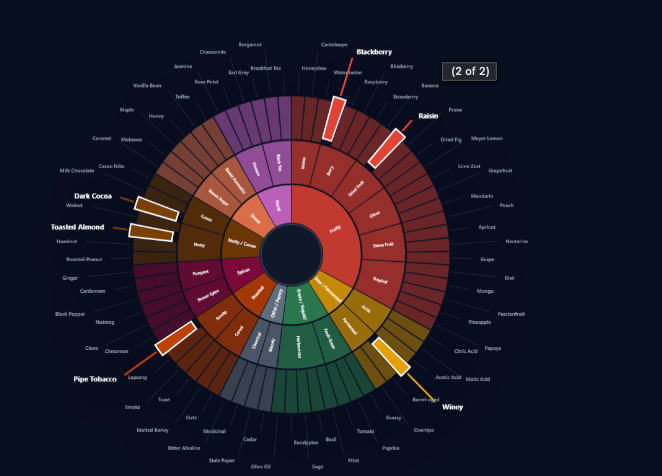
One was intensely fruit-forward, with dark berries, chocolate, spice and wine-like characteristics. The other moved in an entirely different direction, showing more chocolate, nuts, baking spice, sweetness and balance.
That difference matters.
One of the misconceptions we encounter with Excelsa is the idea that it has one singular, unusual flavor profile. But coffee is agriculture. Origin, genetics, processing, fermentation, elevation, harvest conditions and roasting all influence the final cup.
This first experience roasting Excelsa demonstrates exactly that.
Excelsa can express dramatically different profiles while still maintaining characteristics that make it distinct from the Arabica coffees most roasters work with every day.
Excelsa Should Not Simply Be Treated Like Arabica
This may be the most important takeaway from the entire review.
Excelsa is not supposed to be another Arabica variety.
Its physical characteristics are different. Its roast behavior can be different. Its flavor development can be different.
The review tested our recommendation to push these coffees further in the roast and found that Excelsa could handle significant heat while developing deep sweetness, chocolate, fruit and texture.
That is important because much of specialty coffee has spent decades building its language, roasting conventions and evaluation systems around Arabica.
Excelsa gives roasters another canvas.
Instead of asking, “How do we make this behave like Arabica?” the more interesting question may be:
What can Excelsa do that Arabica cannot?
The full roasting notes and tasting results are worth reading for anyone experimenting with the species for the first time.
The Espresso Results May Be Especially Important
One of the strongest signals in the review was how naturally Excelsa translated to espresso.
Both coffees performed well, but the more chocolate-and-nut-driven sample became particularly sweet and confectionary as espresso, while the fruit-forward lot produced a jammy combination of dark fruit, chocolate and almond.
That matters commercially.
Espresso is the foundation of thousands of coffee businesses. A coffee that can bring something genuinely new to espresso while still delivering the body, sweetness and intensity consumers expect has a much larger opportunity than a coffee that exists only as a novelty pour-over.
The review concluded that espresso seemed like a natural fit for both coffees and specifically highlighted the depth and sweetness of one of the samples.
For cafés and roasters, that opens some fascinating possibilities.
Excelsa can become a distinctive single-origin espresso. It can contribute new dimensions to blends. It can stand up to milk. It can appeal to darker-roast customers without sacrificing complexity.
That is exactly the type of versatility a new coffee needs if it is going to move beyond experimentation and become part of everyday coffee programs.
This Is What Building a New Coffee Category Looks Like
We know Excelsa is still unfamiliar to most coffee drinkers.
That is part of the opportunity.
Arabica has enjoyed more than a century of commercial infrastructure, research, breeding, processing knowledge, roasting experience and consumer familiarity.
Excelsa is only beginning to receive that level of attention.
Every roaster who experiments with it adds another piece to the knowledge base.
Every producer who improves processing adds another possibility.
Every café that serves it introduces another group of consumers to a coffee experience they may never have encountered before.
And every independent evaluation like Kelly Beach’s Excelsa review gives the industry more information about what this coffee can become.
That is how categories are built.
Not through one company declaring that something is the future, but through hundreds and eventually thousands of farmers, roasters, researchers, cafés and consumers testing the idea for themselves.
The Bigger Excelsa Thesis
Flavor is only part of why we believe Excelsa deserves greater attention.
Coffee agriculture is facing increasing pressure from heat, changing rainfall patterns, disease and the economic challenges confronting producers around the world.
Excelsa has attracted interest in part because of its agronomic characteristics, including its ability to tolerate conditions that can be challenging for traditional Arabica production.
But climate resilience alone is not enough.
The coffee still has to taste good.
That is why reviews like this are so encouraging.
These samples were not approached simply as a climate experiment. They were approached as coffee.
They were roasted.
They were brewed.
They were evaluated.
And the review ultimately described one as a compelling daily-drinking dark coffee and both as strong candidates for espresso, while expressing real interest in continuing to experiment with Excelsa.
That is the bridge Excelsa needs to cross.
From “interesting climate-resilient coffee species” to simply “coffee I want to drink again.”
We Want More People to Experiment
Our goal at Excelsa Coffee is not to tell the coffee industry exactly what Excelsa should taste like.
We want to make enough high-quality Excelsa available that the industry can discover that for itself.
Different origins.
Different farms.
Different processing methods.
Different roast profiles.
Different brewing methods.
Different interpretations.
We are building the infrastructure to make Excelsa easier for American roasters to access, sample and experiment with, including small samples and trial quantities before committing to larger production orders.
Because the next great Excelsa roast profile probably will not come from us.
It might come from a roaster opening a sample bag somewhere in America and wondering:
What happens if I try this?
That is essentially what happened here.
And the results are exactly why we are so excited about what comes next.
Read the complete independent review, including roast observations, V60, Chemex and espresso tasting notes, here:
Excelsa: First Impressions — An Underrepresented Coffee Species With a Bright Future.