We built a coffee company around a species the industry ignored.
Excelsa is the third species of coffee. It's drought-tolerant, disease-resistant, and was dismissed by the specialty industry for decades. We started this company to prove that was a mistake — and to give farmers a viable path through the climate crisis.
We did not set out to build another coffee company.
At first, we were just two people in San Diego who became unusually curious about a coffee almost nobody seemed to be talking about: Excelsa. It had been growing in parts of the world for generations. Farmers knew it. Families drank it. Trees were already in the ground. Yet throughout most of the commercial coffee industry, it was nearly invisible.
That contradiction bothered us. How could something exist for more than a century, grow in places where coffee matters deeply, taste completely different from what we knew, and still barely have a market? So we kept pulling on the thread. We bought coffee, traveled, talked to farmers, found trees, tasted some terrible Excelsa and some extraordinary Excelsa, and made plenty of mistakes along the way.
Eventually we realized that the problem was not that Excelsa did not exist. Almost none of the systems required to make it matter existed around it.
Quality was inconsistent. Harvesting and processing varied dramatically. Supply was fragmented. The genetics were poorly understood. Most roasters had never worked with it, and most consumers had never heard its name. There was no obvious playbook for taking Excelsa from an overlooked crop grown in pockets around the world to a coffee that could participate meaningfully in the global market.
That was the point when this stopped feeling like a coffee brand to us.
It started feeling like something much bigger.
Coffee has been built around two dominant choices.
For most consumers, coffee means Arabica. Behind the scenes, much of the rest of the world's commercial coffee is Robusta. Together, those coffees support an enormous global industry and the livelihoods of millions of people.
But agriculture does not stand still. Climate changes. Growing conditions change. Economics change. Consumer tastes change. Farmers need options, and so does the coffee industry.
We became fascinated by a fairly simple question: what if one of those options has been here all along?
Excelsa has characteristics that make the question worth pursuing, but we are careful about making grand predictions. Coffee is agriculture, and agriculture has a way of humbling anyone who becomes too certain. Different farms produce different results. Processing matters enormously. Genetics matter. Economics matter. The farmer ultimately has to benefit or none of it works.
We have simply seen enough to believe Excelsa deserves serious attention.
We did not discover Excelsa.
That distinction is important to us. Farmers and communities have known this coffee long before our company existed. We are not inventing a species or claiming ownership over something that belongs to an agricultural history much larger than us.
What we are trying to do is help build the systems around it.
If Excelsa is going to become something more than an obscure coffee, somebody has to do a lot of relatively unglamorous work. Farms have to be identified. Harvesting has to improve. Processing has to become more consistent. Quality has to be measured honestly. Coffee has to be purchased in meaningful quantities, exported, imported, warehoused, roasted and put in front of skeptical coffee professionals and ordinary consumers.
Sometimes they will love it. Sometimes they will not. Both answers matter.
Then you go back and make the next harvest better.
That is essentially what we have been doing.
It started modestly.
There was no giant launch or inherited coffee empire behind Excelsa. For a long time the company consisted mostly of conversations, samples, bags of coffee, plane tickets, spreadsheets, experiments and an unreasonable amount of curiosity.
Slowly, things became more physical. Farmers began contacting us. Roasters started asking questions. Coffee began arriving in larger quantities. We opened a small cafe in San Diego where people could experience Excelsa in the real world. We established warehouse operations. We began developing relationships across multiple producing countries and planting trees whose commercial value will not be fully understood for years.
What started as a curiosity became pallets, inventory, trees, employees, customers, payroll, containers, mistakes, infrastructure and increasingly difficult problems to solve.
In other words, it became a company.
And strangely, after everything that has happened, we still feel very early.
What makes this interesting is how much remains unknown.
Excelsa can taste remarkably different from farm to farm. Processing can completely change its expression. We have tasted lots that disappointed us and others that changed our understanding of what the species could produce. Carefully cultivated and processed Excelsa has now received specialty level evaluations that would have surprised many people familiar only with its historical reputation.
We do not interpret that as proof that we have figured it out.
We interpret it as evidence that there is something worth figuring out.
The next decade of Excelsa will probably be shaped by thousands of decisions made by farmers, processors, researchers, importers, roasters, cafes and consumers. We want to be one of the companies deeply involved in making those decisions better.
That requires better coffee, better agricultural knowledge, better processing, more dependable supply, stronger economics for farmers, capable infrastructure at origin, and enough consumer demand for the entire system to sustain itself.
Those are difficult problems. They are also why we find the opportunity so compelling.
We are not trying to own Excelsa.
A coffee species belongs to no company, and a successful agricultural category cannot be built by one company alone.
If this works, more farmers will grow Excelsa. More exporters will handle it. More importers will bring it into new markets. More roasters will experiment with it. More brands will sell it. We hope that happens.
Our opportunity is not to control Excelsa. It is to become exceptionally good at understanding it and helping build the commercial ecosystem around it.
There is a subtle but important difference.
If the category grows, there are many places a company like ours can create value within it. Agriculture, processing, green coffee, logistics, roasting, consumer products, cafes, research and intellectual infrastructure are all parts of the same system.
We do not know today exactly how large that system can become.
We would rather do the work than pretend that we do.
Two founders followed a strange idea further than expected.
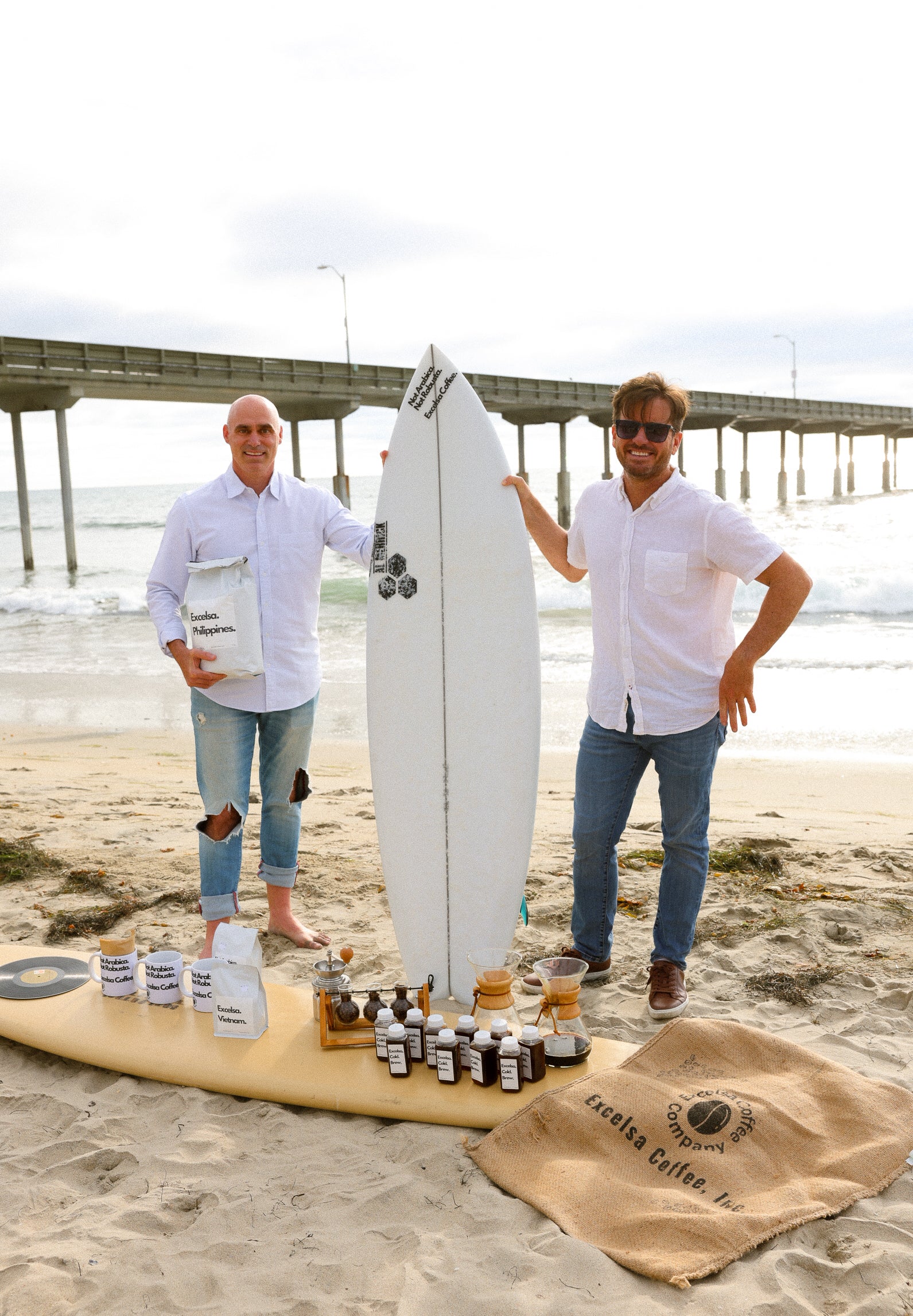
Excelsa was started by Olin Patterson and Michael Mazzotta. Neither of us came from the traditional specialty coffee establishment, and in retrospect that may have been useful. We approached coffee with the curiosity of outsiders and the instincts of entrepreneurs rather than assuming that the industry's existing structure was permanent.
We certainly did not expect to spend this part of our lives thinking about coffee species, fermentation, farms, shipping containers, warehouses, cafes and trees growing thousands of miles away. But curiosity has a way of becoming responsibility. Once we began to understand what might be possible, walking away from the question became increasingly difficult.
There are still days when Excelsa looks extremely small. Someone is packing an order in our warehouse. A few people are drinking coffee in our cafe. A farmer sends us photographs from a harvest. A new tree goes into the ground somewhere.
Those moments keep the company grounded because that is what it actually is. Real people doing small pieces of work.
Every once in a while, though, we step far enough back to see something else. Farmers in several countries are working on the same crop. Coffee is crossing oceans. Roasters are experimenting with it. Customers who had never heard the word are ordering another bag. Trees being planted today may produce coffee years from now.
None of those things individually proves very much.
Together, they make us curious about what they might be accumulating into.
We know what we would like to see.
Someday we would like someone to walk into a coffee shop, look at the menu and see Excelsa without needing an explanation.
Not as a novelty. Not as a curiosity. Not as the strange third coffee someone has to convince them to try.
Just coffee.
Arabica. Robusta. Excelsa.
If that ever becomes normal, it will not be because two founders in San Diego made it happen. It will have taken farmers, scientists, processors, exporters, roasters, entrepreneurs and consumers around the world deciding independently that Excelsa was worth their time.
We would be proud to have built an important company in the middle of that change.
For now, there is still a remarkable amount to learn, a great deal to build, and plenty that could prove us wrong.
That is part of the fun.
Six years, many origins, one species.
First cupping from South Sudan.
Olin and Michael cup Excelsa at a failing Arabica farm from South Sudan. Decides to find a way to buy everything they can grow. Puts it on the internet in brown paper bags and sells out immediately.
Incorporated in San Diego
Excelsa Coffee, Inc. founded. First roast in a used Gene Cafe.
Batch 01 ships
Direct-to-consumer launch. 5,000 lbs, 12 oz retail bag, single origin Philippines. Sold out in 9 days.
Wholesale program opens
First 20 café accounts. Green bean program begins for independent roasters.
1,500 trees planted in Nicaragua
Our own reforestation effort — 1,500 trees planted across Excelsa farmland to support long-term soil and canopy health.
First Excelsa-exclusive café opens in the U.S.
We open the doors out of 40,000 U.S. cafés as the first climate-forward café built entirely around Excelsa.
Launched Excelsa Philippines Origins Company In Philippines
Milling and processing in the Philippines to perfect and protect rare, regenerative excelsa.
Scores 92 (Exceptionally Rare) from a prominent Q Grader
An independent Value Assessment score places Excelsa in the Rare tier — validation for a species once dismissed as low quality.
Small team. Specific obsession.
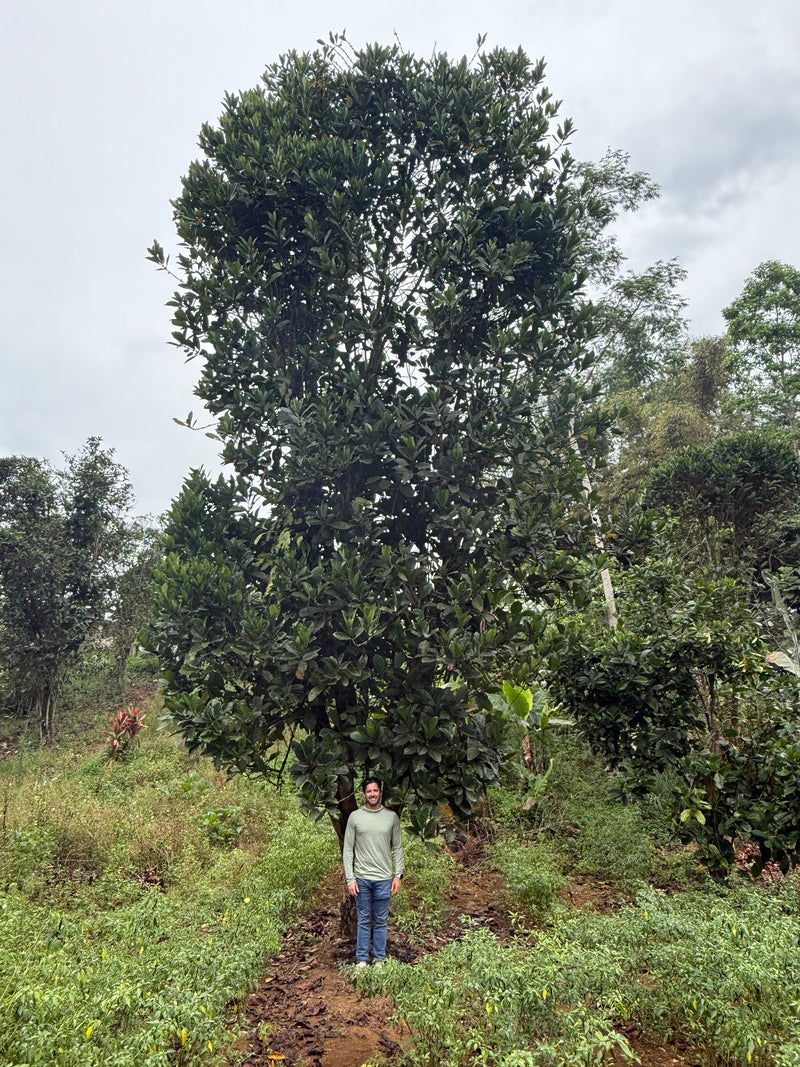
Olin Patterson
Wakes up each morning and thinks "ah, I get to have coffee."
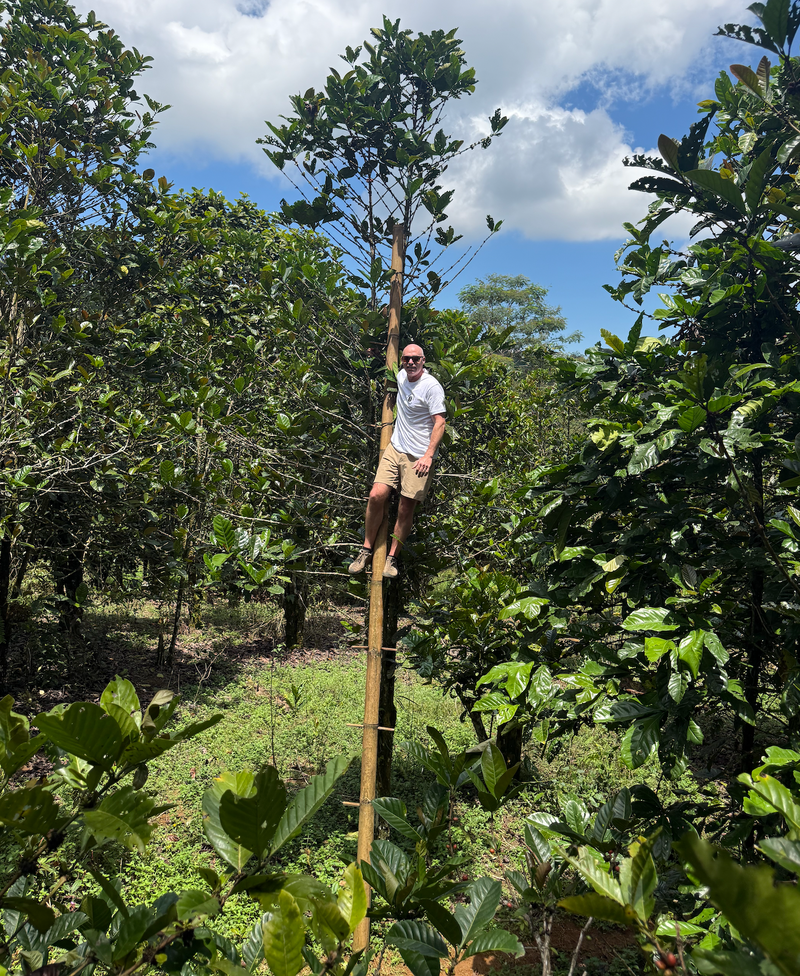
Michael Mazzotta
Thought to himself in 2014 "the world will one day drink excelsa."
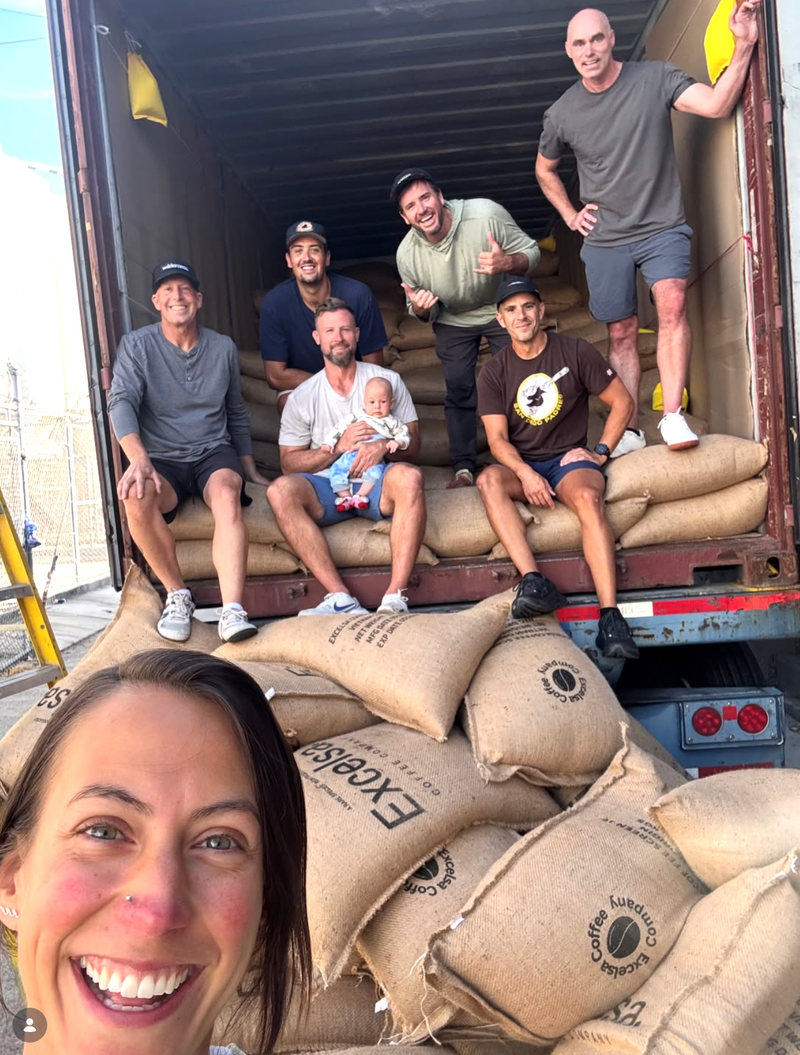
Erika Meyer
Head of operations
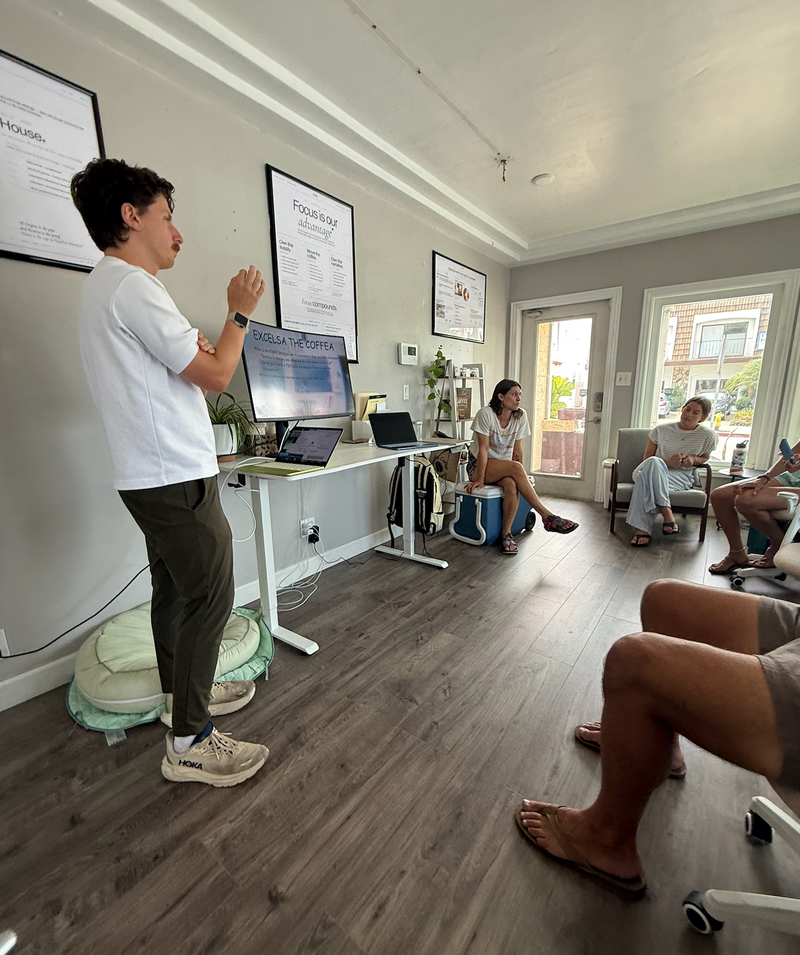
Danny Mauldin
Brings the party
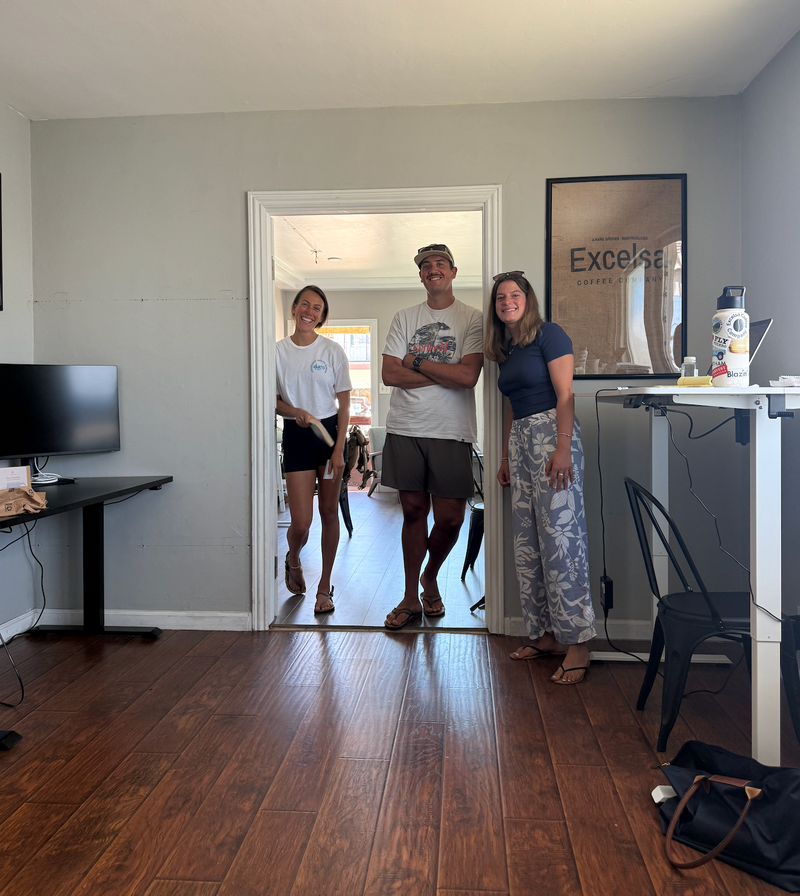
Maddie Caltado
Love of coffee.
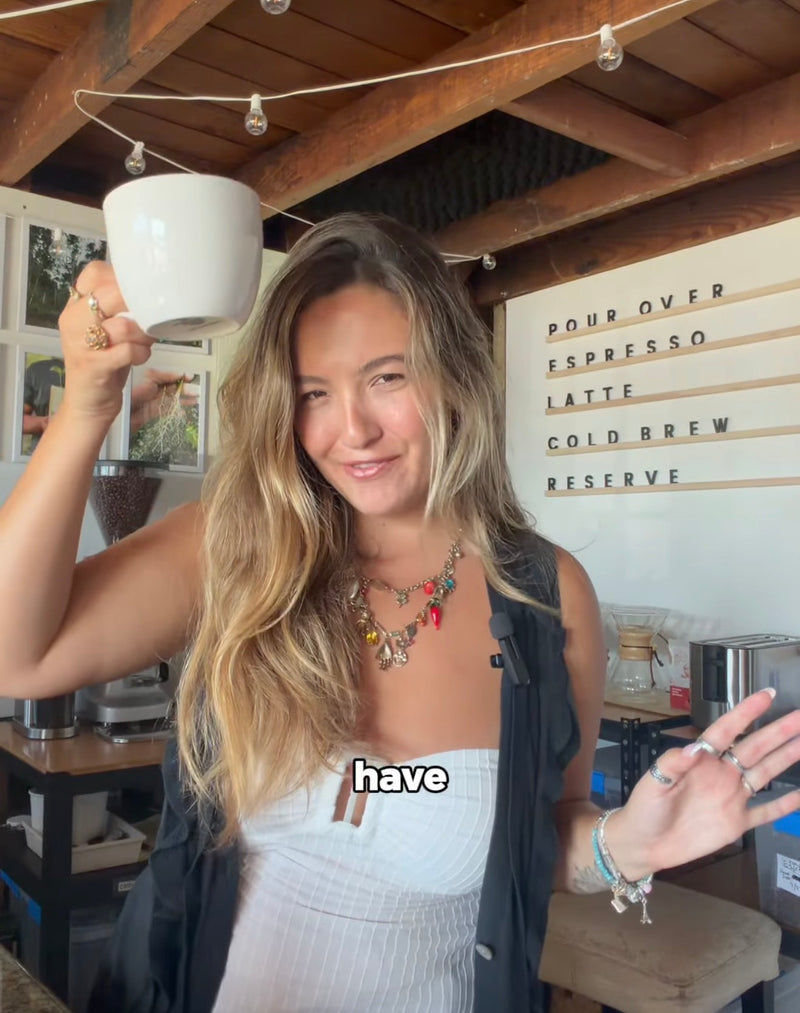
Marina Villares
Creative genius
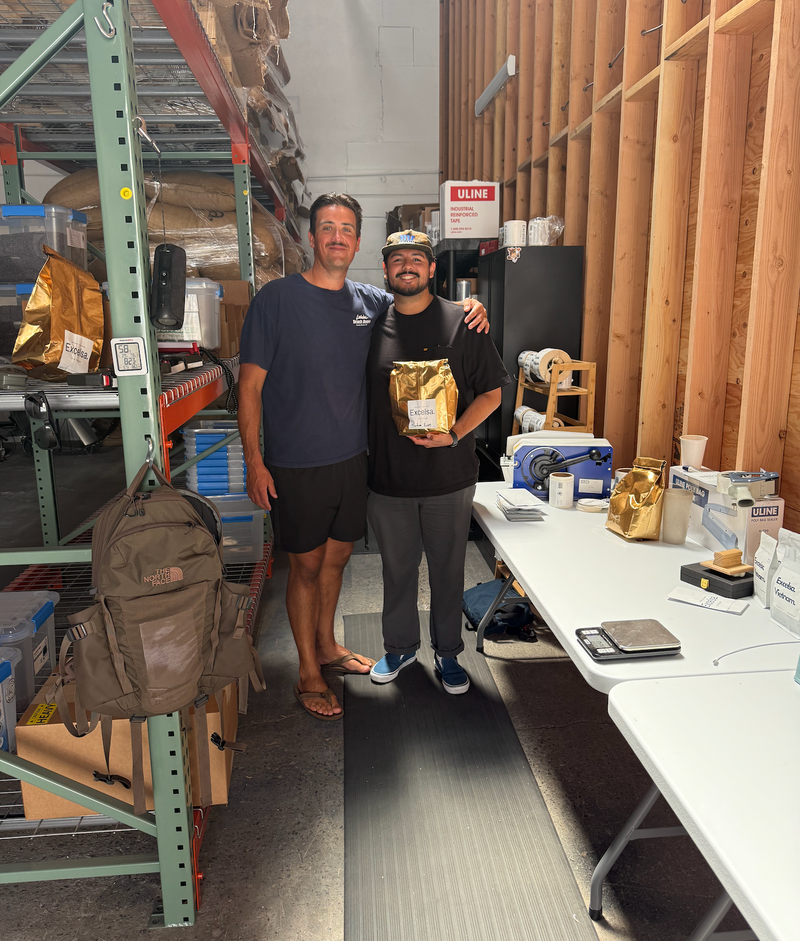
Drew Martin
The writer of many hand written letters.
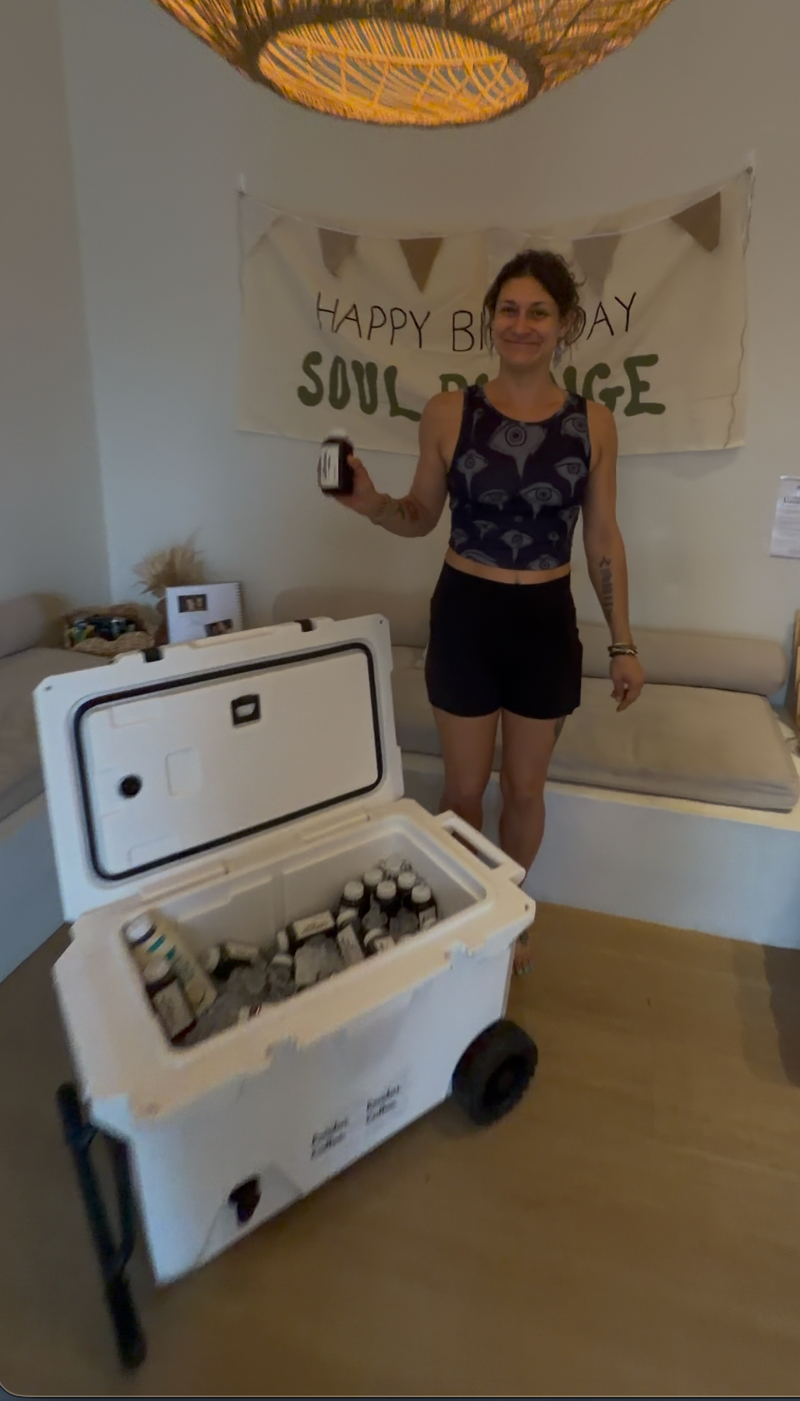
Alex Boyer
Built the perfect elixir cold brew
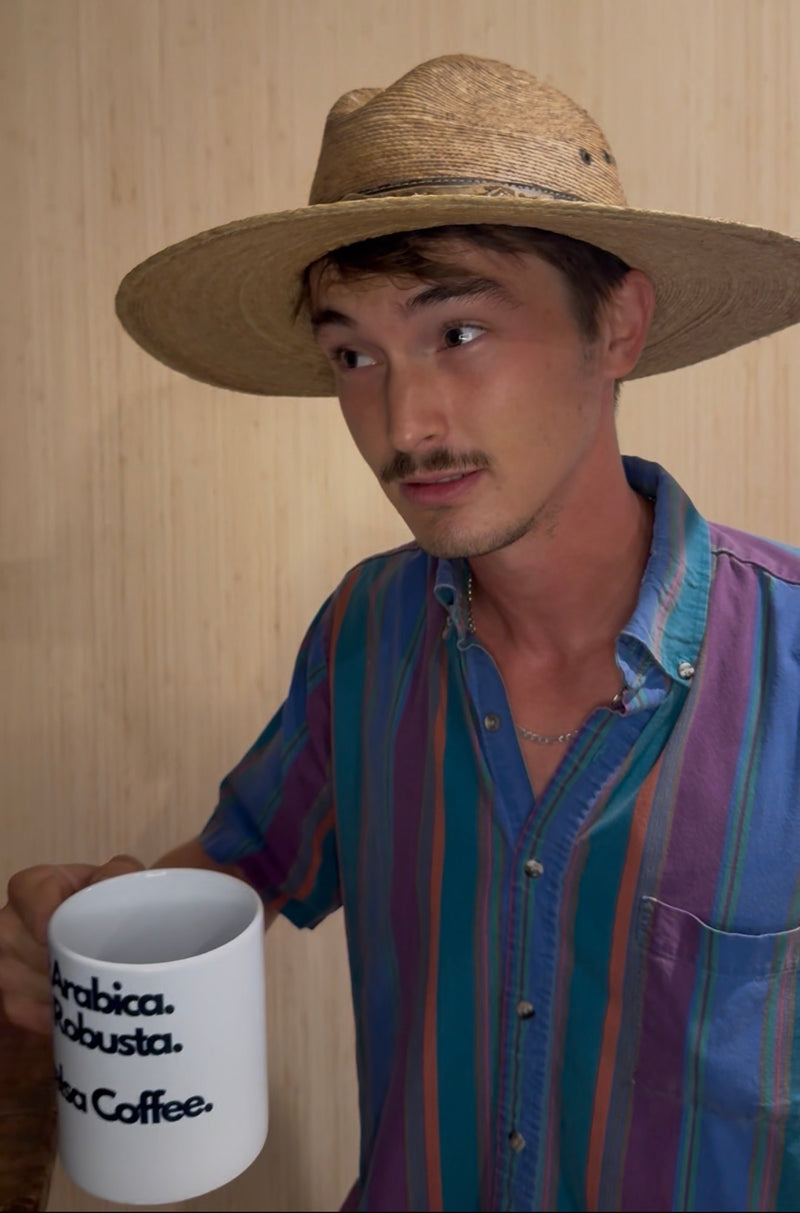
Owen Seymour
Grower of the excelsa trees
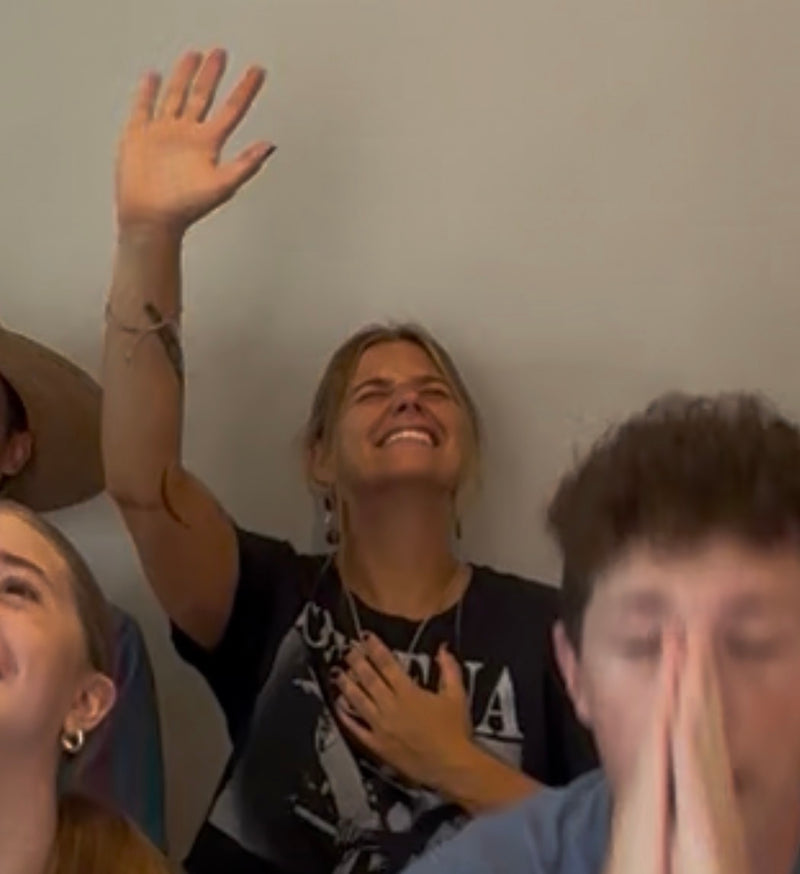
Jane Bunting
Customer experience
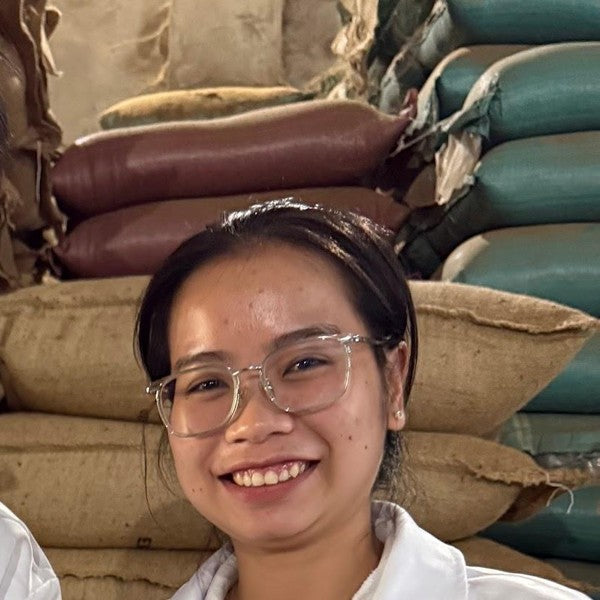
Windy Ngo
Sourcing Vietnam
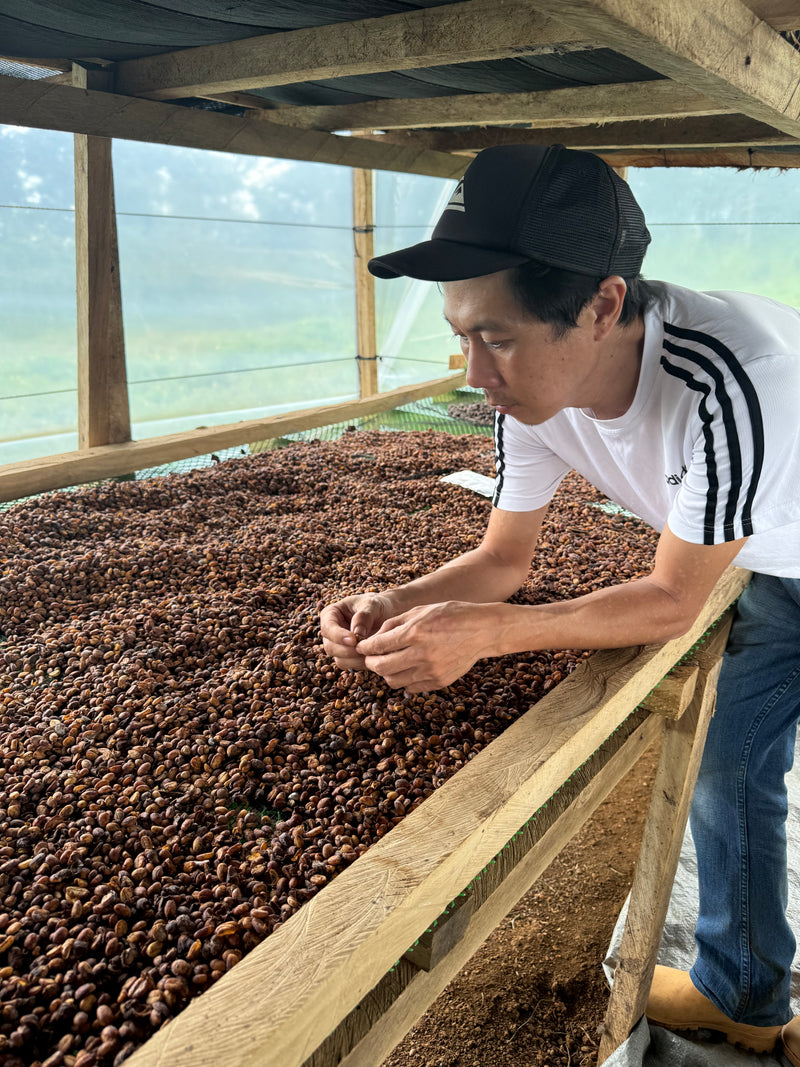
Dennis Ong
Philippine farming