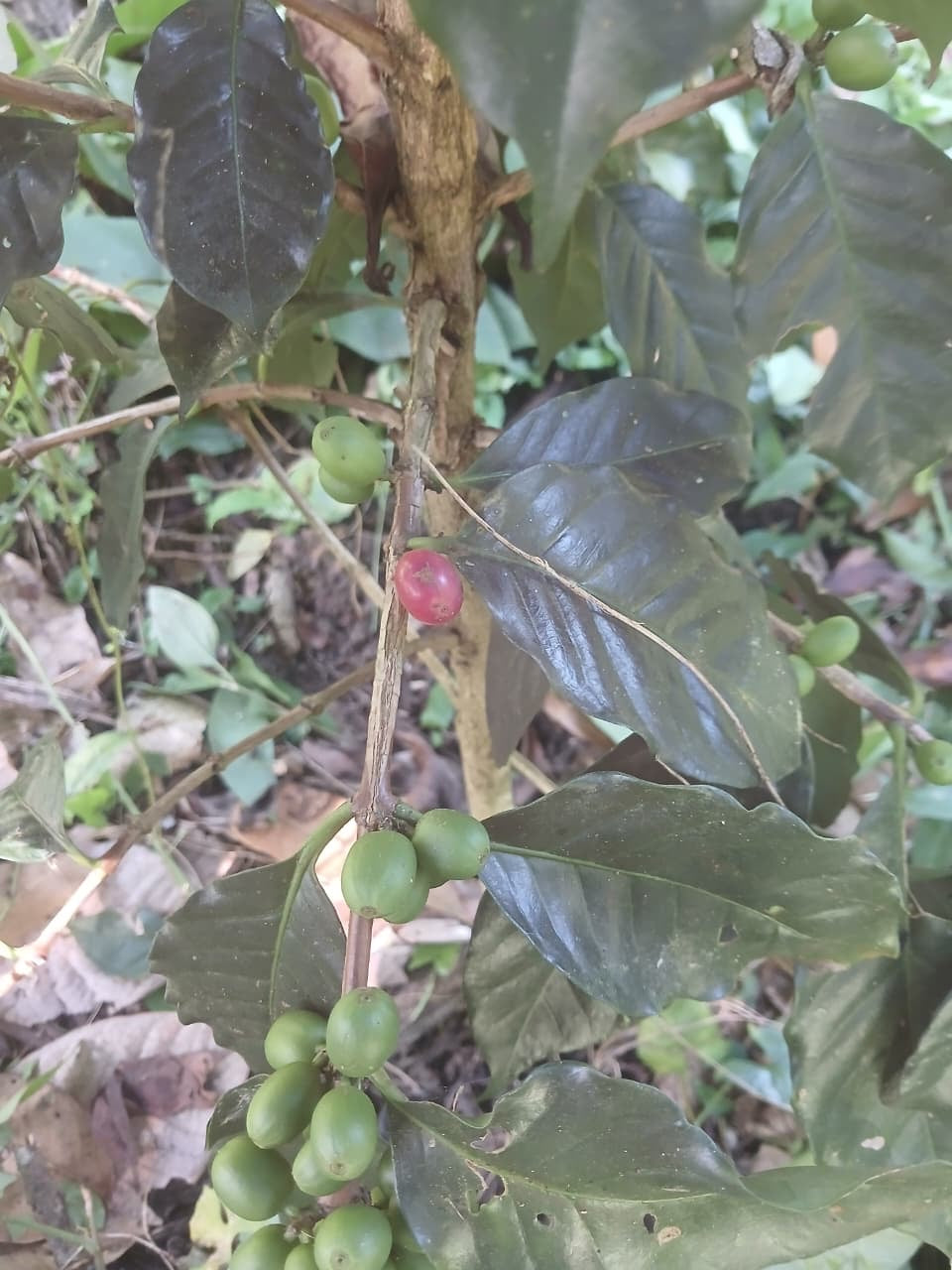
In the face of climate uncertainty, our experience shows why site selection, timely investment, and technically sound crop management are essential pillars for building a more resilient coffee industry.
The El Niño phenomenon has raised concerns across Nicaragua’s agricultural sector. Irregular rainfall, prolonged dry spells, and conditions that favor certain plant health problems are creating significant challenges for farmers, particularly in a sector as climate-dependent as coffee production.
Agricultural impacts have been reported in different parts of the country. In northern Nicaragua, where coffee is a vital source of income for many families, concerns about soil moisture, plant health, and the performance of upcoming harvests are particularly relevant.
Yet, amid this challenging climate outlook, our Excelsa coffee plot is showing encouraging development. This experience offers an important lesson: while we cannot control the weather, we can make decisions that help our crops better withstand its challenges.
Our Story Begins with One Decision: Choosing the Right Place to Plant
A crop’s response to adverse weather conditions depends on more than rainfall alone. Soil characteristics, drainage, moisture availability, vegetation cover, and the suitability of the site for the crop all play important roles.
In our experience with Excelsa, selecting the planting area was a strategic decision. The goal was not simply to find available land, but to identify a location with conditions that could support the crop’s development.
This decision becomes particularly important in the context of El Niño. When rainfall becomes irregular, site characteristics and the soil’s ability to retain and make effective use of water can significantly influence plant performance.
Choosing the right location does not eliminate climate risk, but it is an essential part of preparing to manage it.
Technical Management and Timely Investment: Preparing Before Problems Arise
Our experience also highlights the importance of investing at the right time and maintaining a technically informed approach to crop management.
Agronomic care, plantation maintenance, and carrying out field activities at the appropriate time help create better conditions for plant growth. Likewise, regularly monitoring plant development allows us to identify needs and respond more effectively.
When rainfall becomes unpredictable, every management decision matters. Soil moisture conservation, vegetation control, and the scheduling of field activities must respond to the actual conditions on the farm, rather than relying solely on a fixed work calendar.
Technical management does not mean we can overcome the weather; it means we can manage more effectively what is within our control.
This is where our investment in Excelsa becomes meaningful: combining appropriate site selection, timely investment, and agronomic management that takes the plot’s specific conditions into account.
A Different Outlook Amid Climate Uncertainty
While El Niño raises concerns about its potential effects on agriculture, the development we are observing in our plot gives us reasons to remain optimistic.
Our experience offers an encouraging contrast to the risks facing the broader agricultural sector. However, it is not intended to dismiss the difficulties other farmers are experiencing or to attribute our results exclusively to our management practices.
What it does demonstrate is the value of planning, understanding the land, and providing the crop with consistent technical attention.
For us, the plot’s encouraging development is a positive sign. The next step is to continue documenting its progress, evaluating its response to changing weather conditions, and monitoring key indicators such as plant health, flowering, and productive performance.
A plantation can show healthy vegetative growth and still require time and continued monitoring to demonstrate its long-term productivity and stability.
El Niño Also Has a Lesson to Teach Us
Climate challenges are forcing us to rethink how we approach agriculture. Planting and hoping for favorable conditions is no longer enough. We need to plan ahead, invest wisely, understand the characteristics of the land, and apply management practices suited to each farm.
Our Excelsa plot reflects this philosophy: an investment in innovation, learning, and the development of local knowledge about a coffee variety with the potential to diversify Nicaragua’s coffee industry.
We do not claim there is a formula that guarantees success under every climate event. Our conviction is that well-planned, technically managed agriculture has better tools to respond to uncertainty.
El Niño is testing our production systems; our experience with Excelsa reminds us that preparation begins long before weather conditions change.
We will continue monitoring, learning, and documenting the development of our plot, with the goal of demonstrating how agricultural innovation, timely decisions, and an understanding of local conditions can create new opportunities for coffee production in Nicaragua.
Excelsa Coffee in Nicaragua: A commitment to doing things right, even when the climate presents new challenges.